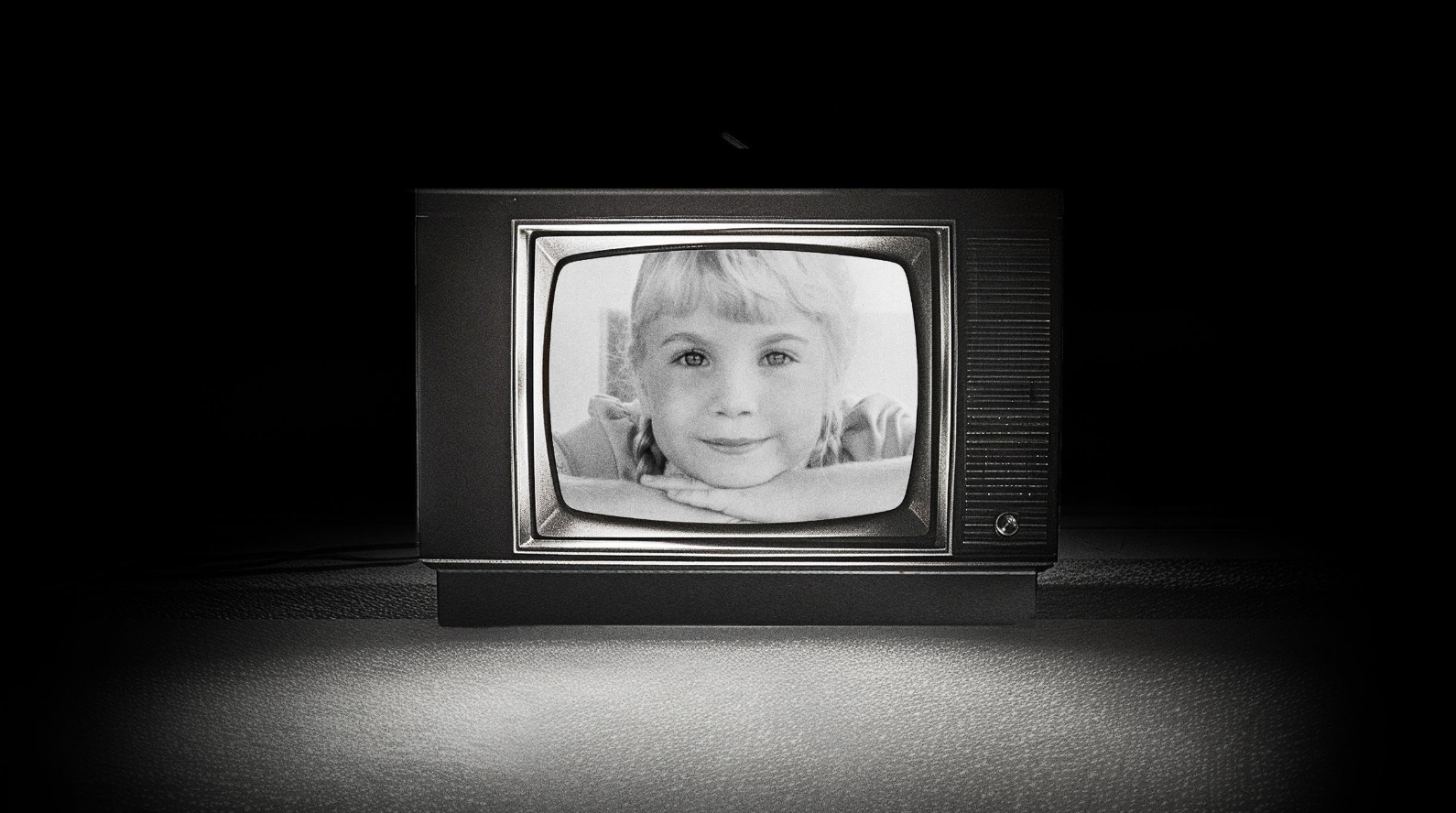
A Heartbreaking and Necessary Tribute
glogg rating: 4.5/5 Stars ⭐️⭐️⭐️⭐️✨
She Was Here offers a deeply personal and necessary look into the short but impactful life of Heather O'Rourke. Released to honor what would have been the Poltergeist star's 50th birthday, the documentary deliberately steps away from the morbid fiction that has overshadowed her legacy for decades.
Rather than dwelling on the macabre, She Was Here succeeds beautifully by highlighting Heather's bright, ambitious personality away from the cameras. Through intimate and tear-jerking interviews with her mother, Kathleen, and her sister, Tammy, we finally meet the real Heather—a normal, grounded kid who loved her family.
Bottom Line: She Was Here successfully strips away the sensationalized Hollywood conspiracy theories. It leaves the audience with the inspiring and tragic true story of a young talent whose time was unfairly cut short, giving Heather the voice she was denied in life.
Reading Between The Lines
The trajectory of Heather O'Rourke's life changed in an instant in 1981. While her older sister, Tammy, was on the MGM lot filming Pennies from Heaven, five-year-old Heather was simply having lunch with her mother, Kathleen, at the studio commissary. It was there that she was spotted by Steven Spielberg.
Spielberg was in the midst of a prolific period known as "The Spielberg Summer," preparing to release E.T. the Extra-Terrestrial and Poltergeist. For the role of Carol Anne Freeling, he was searching for a specific quality. According to contemporary reports, he wanted a "'beatific' four-year-old child... every mother's dream."
Heather, with her striking appearance, was exactly what the production needed. As later described by The New York Times:
"With her wide eyes, long blonde hair and soft voice, she was so striking that the sequel played off her presence."
Heather famously beat out a young Drew Barrymore for the role. The decision was solidified when Heather, during her second interview, proved she could handle the emotional demands of the script. After being asked to scream and cry, she told the director she couldn't handle any more. Spielberg signed her the next day, and a horror icon was born.
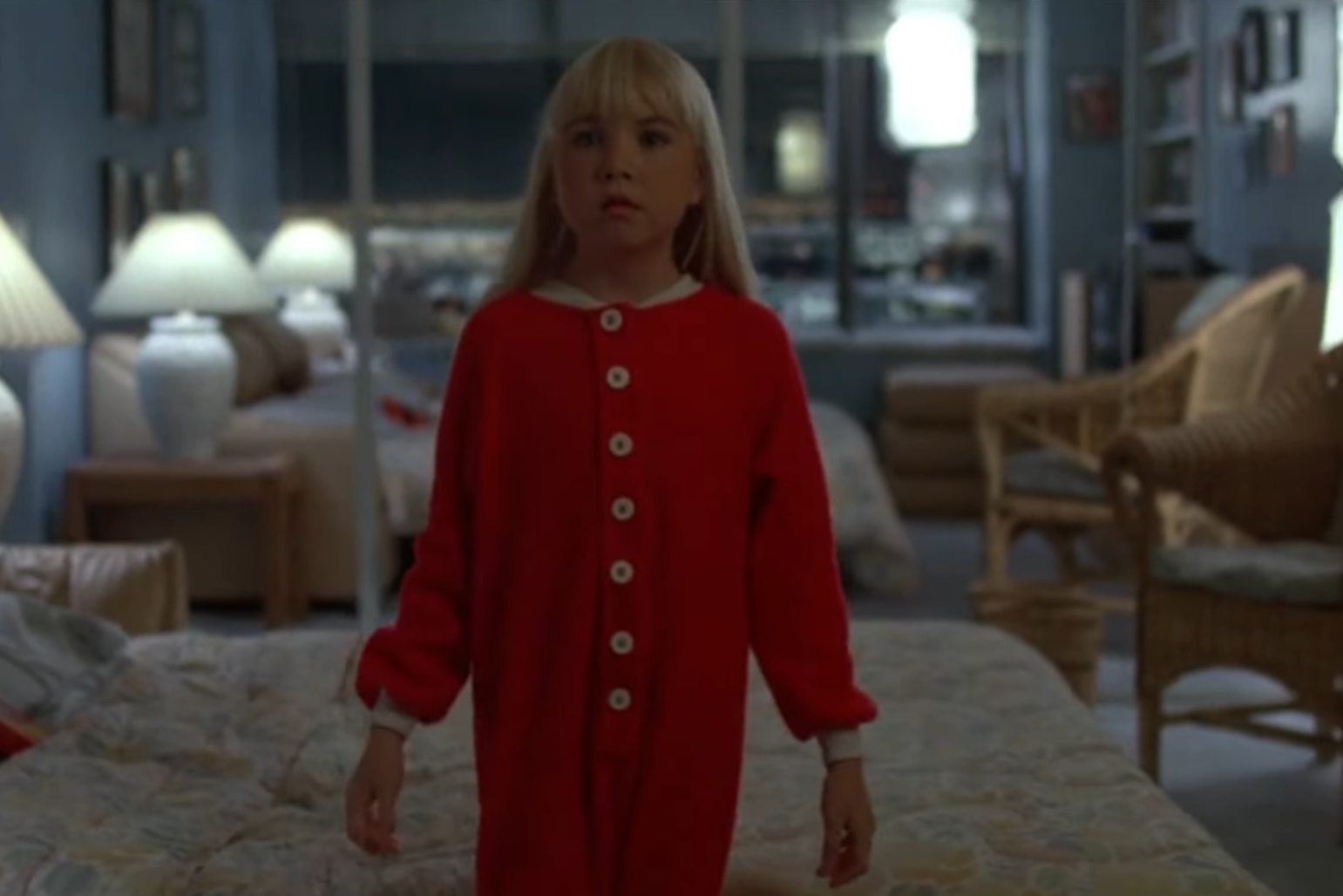
Heather O'Rourke: Complete Filmography
Every confirmed screen appearance, compiled from production records and contemporary reviews. Ages are approximate based on her birth date of December 27, 1975.
| Year | Title | Role | Type | Age |
|---|---|---|---|---|
| 1982 | Poltergeist | Carol Anne Freeling | Film | 6 |
| 1982–1983 | Happy Days | K.C. Cunningham | TV | 6–7 |
| 1983 | Fantasy Island | Guest | TV | 7 |
| 1983–1984 | Webster | Guest | TV | 7–8 |
| 1984 | Poltergeist II: The Other Side | Carol Anne Freeling | Film | 8 |
| 1986 | Different Strokes | Guest | TV | 10 |
| 1987 | Rocky Road | Guest | TV | 11 |
| 1988 | Poltergeist III | Carol Anne Freeling | Film | 11–12 |
Total screen credits: 8 — spanning 1982 to 1988.
The Reality of Being a Child Star
While the world knew her as the girl talking to the "TV people," Heather's life away from the camera was intentionally grounded. She was more than a professional actress; she was a high-achieving student and a leader among her peers.
Despite the high-pressure environment of film sets, Heather maintained a sense of normalcy that her family fought to preserve. Between roles in the Poltergeist trilogy and recurring spots on Happy Days and Webster, she lived in Big Bear Lake, California. There, she was not a celebrity; she was the class president of her fifth-grade class at Big Bear Elementary School.
On set, Heather was a "perfectionist" who never took formal acting classes. Her co-stars often remarked on her maturity, describing her as an "old soul"—a sentiment echoed by Zelda Rubinstein during the filming of the original movies. She was known to memorize entire scripts, not just her own lines, and would frequently help fellow cast members remember their cues.
Her commitment to her work was matched only by her humility. She famously asked her mother, "Why do people want my autograph? It's just my name in writing." This blend of professional brilliance and childhood innocence is what made her loss so profoundly felt by those who worked with her.
Takeaway #1: The Medical Failure Behind the Mystery
The most significant contribution of the She Was Here movie is its investigation into the medical timeline leading to Heather's death. The narrative of a "curse" falls apart when confronted with the documented failures of the healthcare system.
The timeline of tragedy began in January 1987. Heather began experiencing flu-like symptoms, including nausea and abdominal pain. Her family sought treatment at Kaiser Permanente multiple times, only to be told she had a simple virus. However, when her feet began to swell, further tests revealed a parasitic infection (giardiasis) likely caused by well water at their home.
The medical failure deepened when doctors noted lingering inflammation after the parasite was cleared. They diagnosed Heather with Crohn's disease and prescribed Prednisone, a corticosteroid. This medication caused Heather's cheeks to puff up—a physical change that was visible during the filming of Poltergeist III and was something she felt "embarrassed" about.
The Overlooked Red Flags:
- Persistent Anemia: Early pediatric records showed anemia and small stature, which should have alerted doctors to malabsorption issues.
- Abnormal X-rays: A March 1987 upper GI study showed a dilated loop of the small intestine, indicating a partial obstruction, yet it was mislabeled as Crohn's.
- Physical Symptoms: On the morning of her death, Heather's fingers and toes turned blue, and her abdomen was severely distended.
On February 1, 1988, Heather collapsed. While being transported to the hospital, she suffered cardiac arrest. Surgeons later discovered that she did not have Crohn's disease at all. She suffered from congenital stenosis of the intestine—a narrowing of the bowel she had likely had since birth. By the time they attempted to repair the acute bowel obstruction, septic shock had set in. Heather died on the operating table at Rady Children's Hospital.
Takeaway #2: The Documentary That Sets the Record Straight
Directed by Brian Pocrass, the documentary She Was Here serves as an emotional defense of Heather's memory. For decades, the O'Rourke family has had to endure public speculation that they could have done more to save her, or that she was a victim of a supernatural hex.
Tammy O'Rourke and Kathleen O'Rourke use the film to address the pain caused by these urban legends. The family expresses deep hurt over comments from people who believe they "know better than our mom" regarding the circumstances of Heather's health.
As Tammy explains in the film:
"One of the biggest things we've come to notice lately is these comments for years on website and stuff where they talked about Heather... I'm sure it comes from a good place... but it's just so hurtful. So many things, just jabs that they say about her."
The review of her life provided by the film highlights her as a person rather than a horror statistic. It features interviews with industry veterans like Henry Winkler and JoBeth Williams, all of whom remember a child who was "spiritually connected" and "uniquely talented," rather than a victim of a movie-set curse.
What 'She Was Here' Gets Right — And What It Avoids
As the only published review of this documentary, we owe readers an honest critical assessment — not just a summary. Here's where the film succeeds and where it pulls its punches.
The medical timeline is presented with genuine detail
The documentary doesn't shy away from naming specific diagnostic failures — the misread GI study, the Crohn's misdiagnosis, the Prednisone prescription. This level of specificity is rare for a tribute documentary and it's what makes the medical malpractice argument land.
Heather's personality is the genuine focus
Most coverage of Heather leads with horror iconography. This film leads with her student body presidency, her love of baking, her calligraphy. That inversion is handled with care and doesn't feel forced.
The family's grief is given proper space
Kathleen and Tammy O'Rourke are the emotional core of the film and the documentary is wise enough to let them speak at length without rushing to the next talking head. The pacing around their interviews is its strongest editorial decision.
The legal arbitration outcome is vague
The wrongful death lawsuit and its arbitration result — including the controversial 50% comparative negligence finding against the mother — is mentioned but not examined. For a documentary serious about accountability, the legal chapter deserved more than a summary.
The industry's broader child welfare failures go unaddressed
Heather worked in an era with minimal protections for child actors — no mandatory on-set tutors in every state, no regulated hour limits. The documentary focuses on Heather's individual case without connecting it to the systemic context that made it possible.
Poltergeist III's production circumstances
The film was shot while Heather was visibly ill and the production pushed forward regardless. The documentary doesn't press on why — whether contractual, financial, or due to her symptoms being downplayed. That silence is noticeable.
Takeaway #3: Debunking the "Poltergeist Curse" Once and For All
To understand why the "curse" narrative is so persistent, one must look at the other deaths associated with the franchise. However, an investigative look reveals that each has a rational explanation rooted in reality, not the paranormal.
- Dominique Dunne (Dana Freeling): The 22-year-old actress was murdered by her abusive ex-boyfriend, John Sweeney, in 1982. This was a horrific act of domestic violence, not a supernatural occurrence.
- Julian Beck (Kane): The actor was 60 years old and had been battling stomach cancer for 18 months prior to his death in 1985.
- Will Sampson (Taylor): Sampson died in 1987 due to complications from a heart-lung transplant, including kidney failure, and a fungal infection. He knew the risks of the surgery were high due to his weakened state.
The documentary and historical records from sources like Snopes point out the selective memory of "curse" believers. They often ignore the fact that the majority of the cast, including Craig T. Nelson, JoBeth Williams, and Oliver Robins (who played the brother, Robbie), are still alive and well.
Craig T. Nelson remains one of the most vocal critics of the legend. In the She Was Here movie, he is dismissive of the idea:
"What curse? I mean, come on. That's part of the reason why I didn't want to do the third one. That's so ridiculous."
By labeling these tragedies an "urban legend" or an "exploitative narrative," the documentary seeks to remove the "spooky" stigma from what were actually deeply personal, human losses.
Where Are They Now: The Cast of She Was Here
What happened to everyone who appears in the documentary — and what they've said about Heather over the years beyond what made the final cut.
Craig T. Nelson
Steve Freeling (Father)
Best known post-Poltergeist for his Emmy-winning role as Hayden Fox in Coach (1989–1997) and as Bob Parr in Pixar's The Incredibles franchise. He remains one of Hollywood's most recognizable character actors and has been vocal in interviews about his fond memories of Heather, consistently dismissing the curse narrative as disrespectful to her memory.
JoBeth Williams
Diane Freeling (Mother)
Continued a steady film and television career post-Poltergeist, including a role in the TV series Private Practice. She has spoken warmly about Heather in multiple interviews over the decades and appears in She Was Here describing her as spiritually connected and uniquely talented.
Henry Winkler
Family Friend / Commentator
The iconic Fonzie from Happy Days — where Heather guest-starred — has remained one of Hollywood's most beloved figures. His more recent Emmy-winning role as acting coach Gene Cousineau in Barry (2018–2023) introduced him to a new generation. He speaks of Heather with visible warmth in the documentary.
Tammy O'Rourke
Heather's Sister
Tammy is one of the two central interview subjects in She Was Here alongside her mother Kathleen. She has remained largely out of the public eye but has become increasingly vocal about correcting the internet's conspiracy theories surrounding her sister's death, describing the online speculation as hurtful to their family.
Kathleen O'Rourke
Heather's Mother
Filed the wrongful death lawsuit against Kaiser Foundation Hospital following Heather's death. The case went to binding arbitration and was settled out of court. Kathleen's interviews in She Was Here are the documentary's emotional anchor — she speaks candidly about the medical failures and the burden of public scrutiny the family has carried for decades.
Zach Galligan
Commentator
Best known as Billy Peltzer in the Gremlins franchise, Galligan has remained active in the horror convention circuit and independent film world. His appearance in She Was Here is brief but genuine, speaking to the industry atmosphere of the era.
Takeaway #4: Ending Explained: The Final Moments and the Move to an Unmarked Grave
The ending explained in the documentary provides a somber look at the aftermath of Heather's passing and the legal battle that followed. Kathleen O'Rourke filed a wrongful death lawsuit against Kaiser Foundation Hospital, alleging that the failure to diagnose the intestinal stenosis was malpractice.
The Legal Outcome:
- Kaiser maintained that the diagnosis of Crohn's was "appropriate" given the complexity of the case.
- The case eventually went to binding arbitration.
- The arbitration panel found joint and several liability against the doctors but also assessed 50% comparative negligence against the mother.
- The case was settled out of court for an undisclosed sum.
Perhaps the most tragic detail involves Heather's final resting place. Originally interred in an above-ground mausoleum at Westwood Village Memorial Park, her grave became a site of "creepy" activity and vandalism. Rumors suggest that in 1988, the vault was spray-painted with "All Worn Out," and later in 1999 with "BK Killed Me."
To protect Heather's remains from further exploitation and "Haunted Hollywood" tours, her family reportedly had her body moved to an unmarked grave in 2001. This move was intended to give her the peace in death that the "curse" narrative denied her in life.
She Was Here vs. The Mainstream Record: What's Different
How the documentary's account of Heather's life compares to what Wikipedia and mainstream entertainment outlets have historically reported — and where it corrects or expands the record.
| Topic | Mainstream / Wikipedia Account | What She Was Here Adds or Corrects |
|---|---|---|
| Cause of death | Most sources correctly state cardiac arrest and septic shock from congenital intestinal stenosis, but few explain the misdiagnosis chain that led there. | Provides a detailed medical sequence — giardiasis, Crohn's misdiagnosis, Prednisone treatment, the missed GI study — that contextualizes the death as a systemic failure rather than a sudden tragedy. |
| The Poltergeist curse | Wikipedia lists the deaths associated with the franchise without strong editorial pushback, allowing the 'curse' framing to persist passively. | Directly and forcefully debunks the curse through cast testimony, presenting each associated death with its real-world cause and calling the narrative exploitative. |
| Heather's personality | Coverage typically describes her in terms of her on-screen role — the girl from Poltergeist — with brief mentions of her being a 'normal kid.' | Builds a detailed portrait: class president, perfectionist, memorized full scripts, asked why people wanted her autograph, loved baking and calligraphy. The specificity changes the reader's understanding of who she actually was. |
| The legal aftermath | Rarely covered in detail. Most entertainment sources don't mention the arbitration outcome or the comparative negligence finding against the family. | Covers the lawsuit and arbitration but stops short of a thorough examination, leaving key questions about the legal outcome unanswered. |
| Heather's grave relocation | Not widely reported. The move to an unmarked grave is absent from most mainstream coverage. | Confirms the relocation from Westwood Village Memorial Park to an unmarked grave in 2001, framing it as the family's attempt to give Heather peace from exploitation. |
A Legacy That Still Echoes
Heather O'Rourke remains a pop culture icon, not because of the way she died, but because of the way she lived. Her delivery of "They're here!" remains the #69 most famous quote in cinematic history, according to the AFI. She was a child who dreamed of becoming a director, a girl who loved baking and calligraphy, and a student who took immense pride in her report cards.
The documentary She Was Here concludes with a powerful sentiment: Heather was more than a horror icon. She was a sister, a student body president, and a "beautiful child" whose life was cut short by human error and a medical system that failed to see what was right in front of them.
The true tragedy isn't that a movie was cursed; it's that a preventable condition was ignored until it was too late. To see the full review of her incredible life and the truth behind the headlines, you can watch the She was here movie on Prime Video. It is time to let the legend of the curse die, so the memory of Heather O'Rourke can finally live.
She was Here Trailer